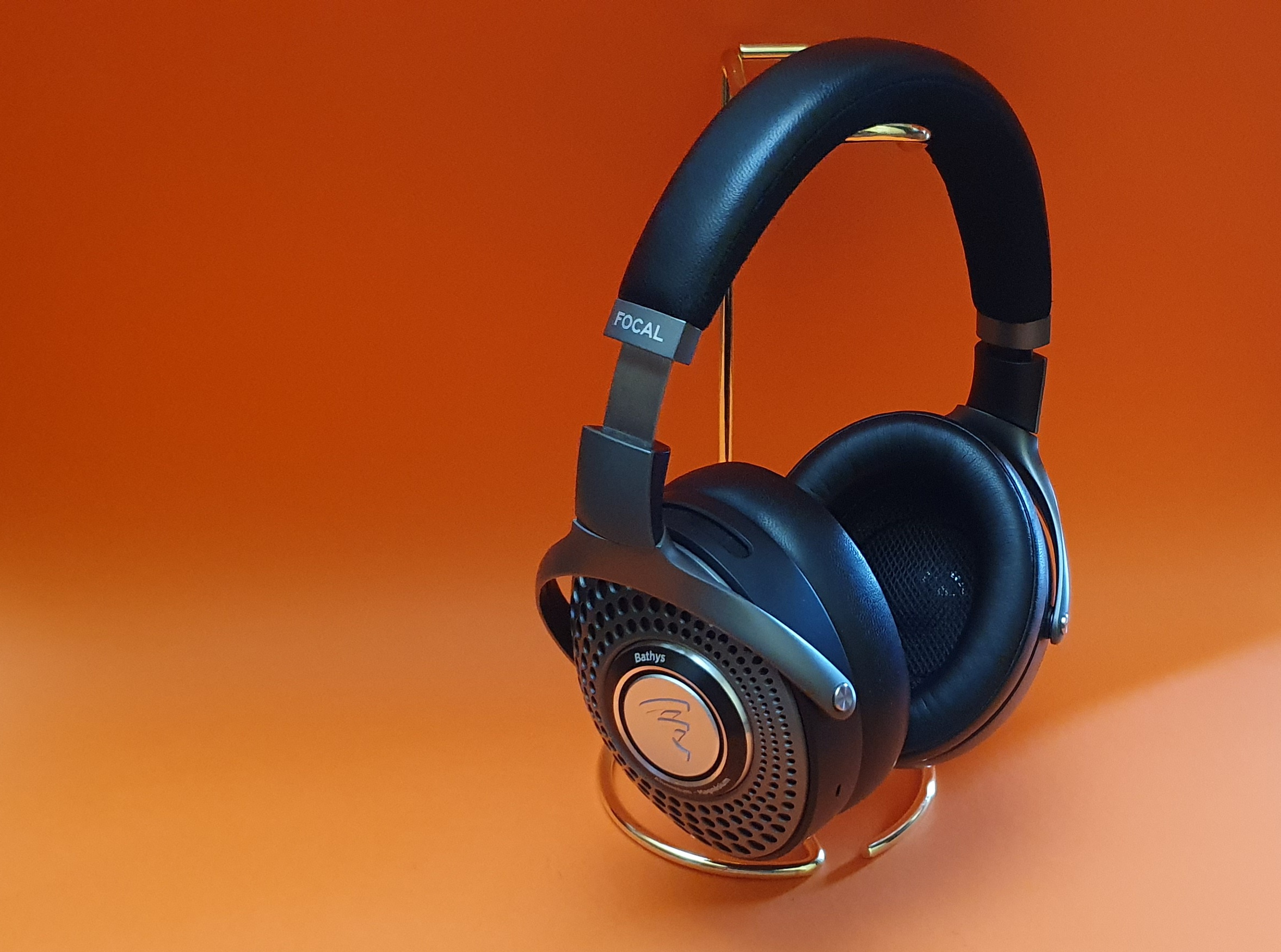
FOCAL BATHYS active noise cancelling wireless headphones
+ Crystalline Focal signature, tempered for a broader audience; good balance of bass and treble detail, with nimble pacing; generous headstage; USB-C DAC listening an audiophile bonus; APT-X And APT-X HD codecs add a little more transparency, but AAC listening is very well sorted.
– Noise cancelling a step behind cutting edge models; somewhat large form factor may not suit discreet listening in public places; a bit heavier than competing flagship models, more than twice the price and not quite as comfortable.
Sound: 9/10
Value: 8/10
A guide to the ratings
FOCAL has a distinguished history of engineering very insightful active studio monitors (indeed, I have a pair of such monitors at home for critical listening), and this has translated into a very well received set of more consumer oriented passive speakers.
More recently, Focal has turned its transducer knowhow towards headphones, with good success too, especially in the high end market. Of particular note is the use of beryllium tweeters in its speakers and headphones, which has given its products a distinctive aural profile – one with sparkling highs and deep detailed insight, no doubt deriving from the brand’s studio monitor heritage.
The Bathys (pronounced Baaa-theees, per their French heritage) are Focal’s most consumer focused headphones to date, sporting all the required features for an up-to-date wireless noise-cancelling headphone. But the introductory price of US$799 in 2022 was certainly not a mass consumer positioning, and indeed would have raised many eyebrows before the introduction of this high-end wireless headphone category by the likes of Apple (Airpods Max), Bowers & Wilkins (PX8) and others. This is still a far cry from Focal’s high-end models like the US$5,000 Utopias. I also have a pair of Focal Elears, which are merely US$999, and my go-to for critical listening.
As such, the Bathys have big shoes to fill in terms of their competition as well as their own reputation in the high-end headphone space. To do so, Focal designed the Bathys to bridge the hi-fi world as well that of the consumer electronics world. The handsome design reflects that of Focal’s high-end hi-fi headphones, though the holes surrounding the logo may tigger trypophobia in some!
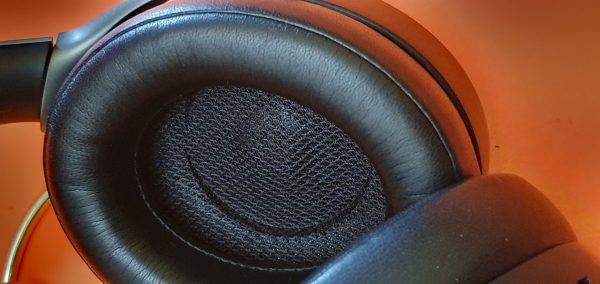
The alloy/polymer build is not featherweight, but not as dense or as heavy as the Apple Airpods Max. Comfort was good on my head with a solid clamping force, though I would say that the competition, like Sony and Bose, is more comfortable for longer listening and for wearing whilst on the move. The majority of the controls are on the right ear cup, save for one button to control the ANC mode on the left. On the right, there are the volume buttons, Bluetooth pairing, assistant trigger button, USB-C input and 3.5mm input jack. If there is one nit pick, the buttons feel plasticky, compared with the much more luxurious alloy and leather build.
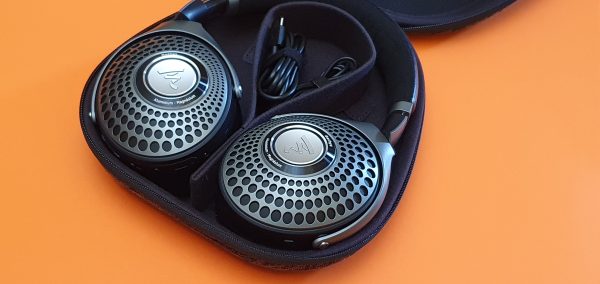
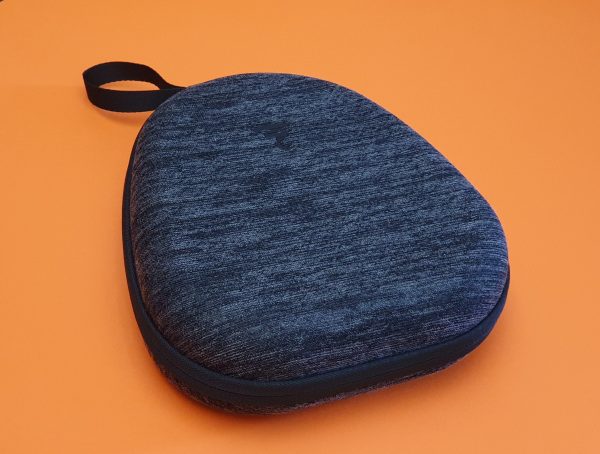
The Bathys come in a smart fabric trimmed hard shell carrying case, but the cans themselves only fold flat in one plane, they do not fold in a second axis to compact like the Bose QC series headphones. Provided with the headphones are USB-C cables, 3.5mm to 3.5mm analogue aux cable.
There is also a companion app on iOS and Android for Focal/Naim products which allows for sound personalisation as well as controlling ANC, EQ, and LED behaviour. The sound personalisation takes a few minutes of focused listening concentration, but I think it’s well worth it – it certainly made for a clearer and more open presentation for myself.
LISTENING
I tested the Bathys mostly with my iPhone 15 Pro Max with Bluetooth streaming AAC, as this would be the way most people would use them. I used Apple Music mostly for this listening, which I find to be a good source of uncompressed music (though this is necessarily compressed over Bluetooth). I also used a USB-C cable to listen to the headphones from an Apple Macbook Air to test the DAC mode. I finally also did some listening via the 3.5mm jack, from a Chord Electronics Mojo2 portable DAC.
On casual listening, the Bathys have a good measure of the signature Focal clarity, with good high-end sparkle, and sense of timing. Bass is tight and nimble and can track complex polyrhythms such as Dave Brubeck’s Take Five. The midrange is insightful with a very slightly warm tilt. On orchestral tracks such as Herbert von Karajan conducting the Berlin Philharmonic in his 1963 rendition of Beethoven’s Symphonies (Tidal MQA Stream), the headstage projected was wide and deep, with appropriate scale. There was also a good rendition of the timbral texture of the strings versus the brass and woodwinds.
I also paired the headphones briefly with my Android phone to try them out in APT-X mode and with the Tidal stream of Bill Evans’ Quintessence, the CD quality stream had a slight lift in clarity in the mid upper range, but it is a fairly subtle effect. In normal, noisy listening conditions, these differences will not be noticeable.
When in USB DAC mode, there is yet another appreciable lift in clarity and detail, and this is a useful addition for those who tilt towards an audiophile bent, but it’s not really the way this headphone is to be listened to.
Finally in 3.5mm analogue input mode. This was oddly not the best way to listen to the headphones, sounding very slightly veiled in the midrange. I think this mode is best left for when you have no other way to connect; eg. to airline audio output jacks with an adaptor.
vs Apple Airpods Max
The Bathys are clearly much more hi-fi oriented, with better detail retrieval and PRaT (pace, rhythm and timing, a Naim trait). But the Airpods have deeper and more textured bass, and a bigger and wider headstage. Not to mention the unbeatable integration with the Apple ecosystem. For the audiophile, I would definitely lean more towards the Bathys, but for the committed Apple fanboy, the Airpods Max are probably the better choice.
vs Sony WH1000XM5s
Certainly a step up from the Sony XM5s, the Bathys offer a lot more insight into the music. But the Sonys are lighter and easier to wear for longer periods, while their aural profile makes for easier listening across genres and also for poorer recordings. The Sonys also have probably some of the best ANC performance and an app which optimises that to the nth degree. The Sonys are also much cheaper, at half the price or less.
On noise cancelling and transparency mode
The Bathys have very competent noise cancelling, though not at the level of the Airpods Max or the Sony XM5s. In a noisy cafe or in a plane, they will do the job and with music playing, you will likely not notice much difference, though they are not the state of the art. Neither is the transparency mode. The best in this department are the Airpods Max, which almost sound like not wearing any headphones at all.

CONCLUSION
The Bathys are probably one of the best ANC headphones out in the market, especially if you have higher audiophile requirements. However, they are certainly bettered narrowly in ANC, comfort and pricing as well as ecosystem integration by key competitors.
Careful auditioning of the Bathys is, of course, a must to confirm if they sing well to your ears and fit well on your head, but they certainly deserve a hearty recommendation if your budget stretches to their not inconsiderable price.
Gear
Sources: Apple iPhone 15 Pro Max, Samsung S24 Ultra, Chord Electronics Mojo2
Price: US$799
Malaysian price: RM3,999
Malaysian distributor: CMY Audio & Visual (+603-2143 9406) / Find your distributor.


Looking for top ANC earbuds in the UAE? Experience premium sound, noise cancellation, and unbeatable prices at Hezire.com. If you’re searching for the best earbuds price in UAE, check them out now!